Upper Eyelid Surgery
in Harley Street
Trusted eyelid surgery by a leading consultant plastic surgeon
Key facts
Upper eyelid surgery, also known as upper blepharoplasty, is a procedure aimed at rejuvenating the appearance of the upper eyelids, resulting in a more refreshed and youthful look.
How it works: removal of excess skin and fat from upper eyelids
Anaesthesia: local anaesthesia
Recovery time: 7-10 days
Results: after swelling has settled down
Lasts: ± 10 years
What is upper eyelid surgery?
An upper eyelid correction, also known as upper blepharoplasty, is a surgical procedure aimed at rejuvenating the appearance of the upper eyelids, resulting in a more refreshed and youthful look.
As we age, the skin on our upper eyelids can lose elasticity, causing it to sag and create a heavy, tired, or hooded appearance. In some cases, this excess skin may even impair vision. Upper blepharoplasty addresses these concerns by removing excess skin and fat.
When performing eyelid surgery, Dr. Gino Vissers carefully considers your individual facial structure and desired outcome to determine the most suitable surgical approach. For many patients, the results of eyelid surgery are remarkably rejuvenating, making them appear years younger. Not only does eyelid surgery restore a more youthful appearance, it also helps individuals regain their self-confidence and feel more comfortable in their own skin.
Types of eyelid surgery
Blepharoplasty is a highly versatile procedure that can be tailored to each patient’s unique anatomy and aesthetic goals. Different techniques focus on specific areas of the eyelids to rejuvenate the eyes and enhance overall facial harmony. Below are some of the most common types of blepharoplasty procedures explained:
Upper eyelid surgery
Upper eyelid surgery targets excess skin and fat that cause drooping or a heavy-lidded appearance. Through a small incision placed within the natural crease, Dr. Vissers removes redundant tissue and tightens the skin, restoring a more youthful, refreshed, and alert look. Read more.
Lower eyelid surgery addresses puffiness, bags, and sagging beneath the eyes. Depending on the patient’s needs, the incision may be made just inside the eyelid (transconjunctival) or along the lash line (subciliary). The procedure redistributes or removes excess fat and smooths the skin, reducing under-eye shadows and creating a more rested appearance. Read more.
Preservation blepharoplasty is a modern, advanced approach to eyelid rejuvenation that prioritises the retention of your natural anatomy. Unlike traditional eyelid surgery, which often involves the aggressive removal of skin, muscle, and fat, the preservation technique focuses on redistributing and "tucking" tissues to restore a youthful volume without the risk of a hollowed appearance.
Read more.
Lateral canthoplasty
Sometimes referred to as almond eye surgery, lateral canthoplasty refines the outer corner of the eye to create a longer, more almond-shaped contour. By carefully adjusting the outer eyelid structures, this procedure opens up the eyes, giving them a wider and more balanced appearance. This procedure is particularly good for patients who want to have a more lifted appearance of their eyes and cheeks.
Eyelid surgery for men
Eyelid surgery for men focuses on achieving a rejuvenated appearance without feminising the eyes. The approach is typically more conservative, preserving masculine features while reducing puffiness, sagging skin, or tired-looking eyes for a subtle, natural result. Read more.
Upper vs Lower eyelid surgery: What's the difference?
Blepharoplasty can be performed on the upper eyelids, lower eyelids, or both, depending on your personal concerns and anatomy. Each procedure is designed to address different signs of ageing around the eyes using specialised surgical techniques, while sharing the same goal: to create a fresher, more rested, and naturally rejuvenated appearance.
| Upper eyelid surgery | Lower eyelid surgery | |
|---|---|---|
| Area treated | Upper eyelids | Lower eyelids and under-eye area |
| Primary concern | Heavy, hooded, or drooping upper lids | Under-eye bags, puffiness, loose skin |
| What is corrected | Excess skin and fat removed or repositioned | Fat repositioned or removed, skin tightened |
| Incision placement | Within the natural upper eyelid crease | Just below the lower lash line (not routinely done anymore) or inside the lower lid |
| Visible scarring | Concealed within the eyelid crease | Minimal to none depending on technique |
| Can improve vision | Yes, in significant cases | No |
| Best suited to | Patients with hooded or tired-looking upper lids | Patients who look consistently tired due to under-eye bags |
| Can be combined | Yes, frequently combined with lower eyelid surgery or brow lift surgery | Yes, frequently combined with upper blepharoplasty or performed as part of a facelift |
Signs you may need upper eyelid surgery
Upper eyelid surgery is designed for patients whose main concern is the appearance of the upper eyelids. You may be a suitable candidate if you:
- Have excess upper eyelid skin
- Feel your eyelids appear heavy, hooded, or drooping
- Notice your eyes look smaller or less open than they once did
- Frequently raise your eyebrows to compensate for heavy upper eyelids
- Experience upper eyelid skin beginning to affect your peripheral vision
- Feel your eyes make you look tired, stern, or older than you feel
- Would like a more open, refreshed eye shape while maintaining a natural appearance
It is also important to recognise that heavy upper eyelids are not always caused by excess eyelid skin alone. In some patients, a descending brow contributes significantly to the appearance of hooding and upper eyelid heaviness. During your consultation,
Dr. Gino Vissers will assess both the eyelids and brow position to determine whether upper blepharoplasty, a brow lift, or a combination of procedures is most appropriate for achieving the best aesthetic result.
Upper eyelid surgery can be combined with other facial plastic surgery procedures to get a harmonious and balanced complete facial rejuvenation:
Preparing for upper eyelid surgery
Getting ready for your blepharoplasty is just as important as the surgery itself. A little preparation goes a long way in making your recovery smoother, more comfortable, and stress-free. Here are some simple steps to help you feel confident and ready:
Follow your surgeon's guidance
Dr. Vissers will give you clear instructions to follow before surgery, such as pausing certain medications, supplements, smoking, or alcohol. These steps are all designed to keep you safe and help your body heal quickly, so think of them as part of your recovery plan.
Arrange support for after surgery
You’ll need someone you trust to take you home after your procedure, since you won’t be able to drive yourself. It’s also helpful to have a friend or family member nearby for the first day or two, just in case you need an extra hand. Give yourself permission to take a proper break from work and daily tasks so you can focus on resting.
Create a comfortable recovery space
Before your surgery, set up a cozy spot at home where you can relax. Keep a few extra pillows ready to support your head, and have ice packs available to ease any swelling. Place everything you might need, like your medication, gauze, and ointment, within easy reach so you don’t have to get up too often.
What happens during upper eyelid surgery?
During the procedure,
Dr. Gino Vissers will make discreet incisions along the natural creases of the upper eyelids, ensuring that the scars will be hidden. Through these incisions, excess skin and fatty tissue are carefully excised. This precise surgical technique results in a more open and refreshed eye appearance, restoring a youthful contour to the upper eyelids. At the end of the surgery, the skin is closed with stitches.
Upper eyelid correction can also be combined with other procedures, such as lower eyelid correction or brow lift, to achieve comprehensive facial rejuvenation. Dr. Gino Vissers will work closely with you to understand your unique aesthetic goals and develop a personalised treatment plan that best suits your needs.
Why choose
Dr. Gino Vissers?
Choosing the right surgeon is the most important decision when considering blepharoplasty in London. Eyelid surgery is one of the most delicate and technically demanding procedures in facial plastic surgery, requiring a precise understanding of facial anatomy, ageing, and aesthetic balance to achieve natural-looking results.
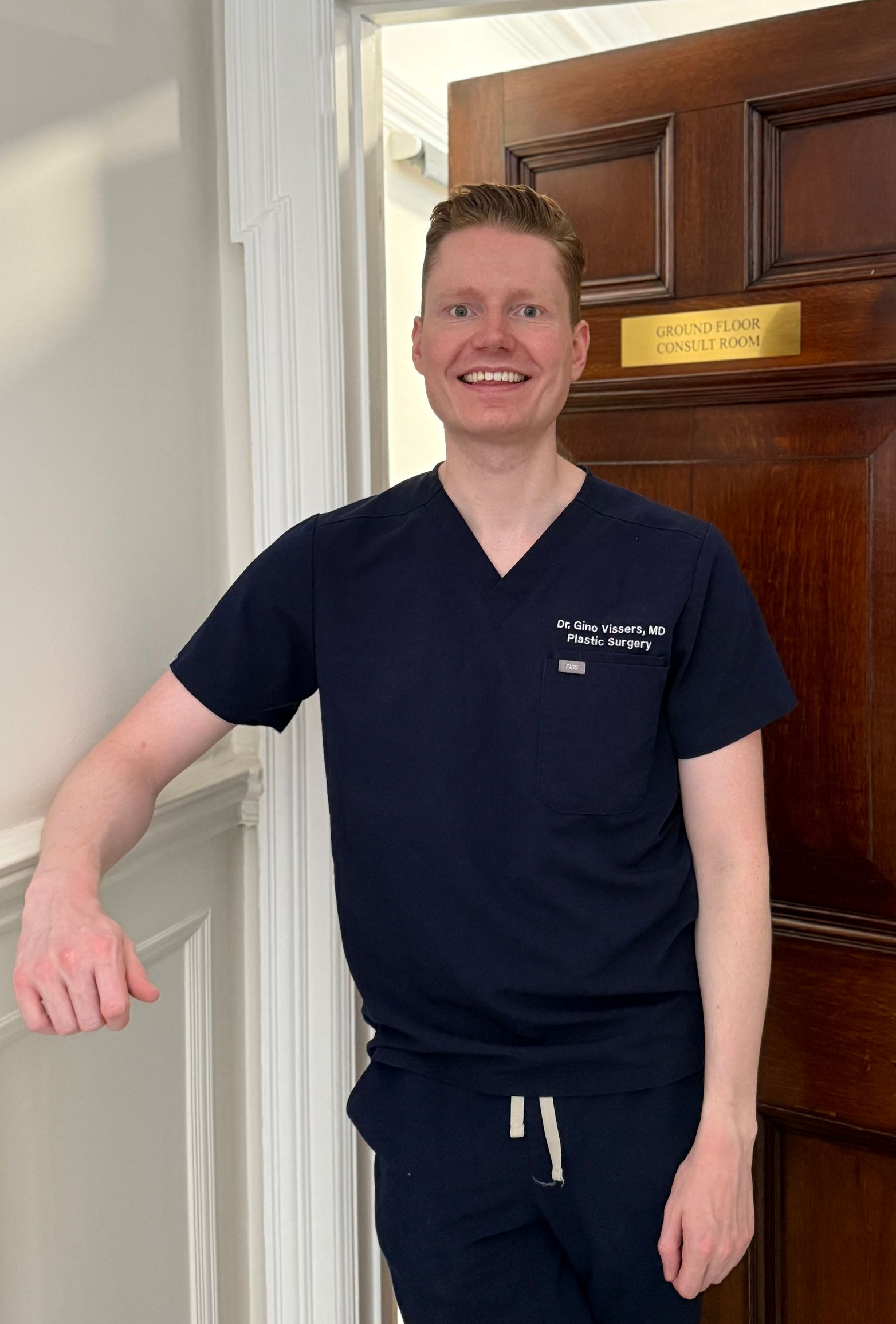
At Dr. Gino Vissers' Harley Street Clinic, blepharoplasty procedures are performed by Dr. Gino Vissers, an award-winning and triple board-certified consultant plastic surgeon in London with a specialist interest in facial surgery and eyelid rejuvenation. Every patient receives a personalised assessment to determine the most suitable treatment plan, whether that involves upper eyelid surgery, lower blepharoplasty, fat repositioning, skin tightening, or a combination of procedures.
Dr. Gino Vissers has a 5.0 star rating on Google. Patients travel from across London, the UK, and internationally for blepharoplasty with Dr Gino Vissers because of his refined surgical approach, attention to detail, and focus on achieving elegant, natural outcomes that preserve facial character rather than creating an “overdone” appearance.
Recovery after upper eyelid surgery
Recovery after upper blepharoplasty typically involves a short downtime. Patients will need to take about a week off from work to rest and recover. Expect some swelling and bruising that will build over the first few days, then diminish, and slowly fade over the next 7-10 days. Dr. Gino Vissers may prescribe you some eye drops and/or ointment during this time for comfort.
Sleep on your back during the first 1-2 weeks to help minimise swelling and improve the healing process. You may wear glasses the day after your surgery, but wait for 2 weeks before using contacts lenses. You can exercise again after 2-4 weeks.
Patients should also avoid exposing their eyes to the sun, and use sunscreen (SPF50) to protect their scars from damage during healing. Dr. Gino Vissers will provide detailed post-operative instructions to promote optimal healing and ensure a smooth and comfortable recovery process.
Most patients notice a significant improvement within the first two weeks as bruising and swelling begin to settle. However, final blepharoplasty results develop gradually over time. Residual swelling continues to improve over several months, with the final eyelid contours typically visible between 3 and 6 months after surgery.
Recovery timeline after eyelid surgery
Days 1 to 3
Upper blepharoplasty is typically performed as a day-case procedure, meaning patients return home the same day. During the first few days, it is normal to experience:
- Mild to moderate swelling around the eyes
- Bruising of the eyelids
- Tightness or mild discomfort
- Temporary watering or dryness of the eyes
Patients are advised to keep the head elevated, apply cold compresses as instructed, and take prescribed medication if required. Reading, prolonged screen use, contact lenses, and strenuous activity should be avoided during this early healing phase.
Days 4 to 7
Swelling and bruising usually begin to improve noticeably during the first week. Sutures are generally removed between 5 and 7 days after surgery at your first post-operative review appointment. By the end of the first week, most patients feel significantly more comfortable, although mild puffiness around the eyelids can still be present.
Weeks 1 to 2
Most patients feel ready to return to work, social activities, and light daily routines after approximately 7 to 10 days. Bruising continues to fade and the eyes begin to look fresher and more open.
During this period, it is still important to avoid contact lenses, heavy lifting, intense exercise, and other activities that significantly raise blood pressure
Weeks 2 to 4
Residual swelling continues to settle and the eyelid contours become increasingly refined. Patients can usually wear contact lenses again and resume light exercise and most normal activities gradually during this stage of recovery.
The results of upper blepharoplasty become more noticeable as the eyes appear brighter, less hooded, and more refreshed.
Around 6 Weeks
By six weeks after eyelid surgery, most patients have returned fully to their normal lifestyle and exercise routine. The majority of swelling has resolved, and the upper eyelids look significantly more defined and rejuvenated.
After 3 to 6 Months
Final upper blepharoplasty results continue to develop over several months. By 3 to 6 months, residual swelling has fully resolved, scars have softened further, and the eyelid contours have settled into their final position.
Blepharoplasty results: What to expect after eyelid surgery
Blepharoplasty is designed to create natural-looking rejuvenation of the eye area rather than a dramatically different appearance. When performed with precision, the result should leave you looking fresher, brighter, and more rested, while still looking entirely like yourself. The focus of upper eyelid surgery is to restore harmony to the eye area while preserving your natural facial character and expression.
Upper eyelid surgery can achieve:
- A more open and defined upper eyelid contour
- Reduction of heaviness and hooding of the upper eyelids
- A brighter, more awake, and refreshed appearance
- Improvement in peripheral vision where excess skin was affecting the visual field
- Natural-looking rejuvenation that remains appropriate to your facial features
Although blepharoplasty can achieve significant improvement in the eye area, it is important to have realistic expectations. Eyelid surgery does not typically correct:
- Dark circles caused primarily by skin pigmentation
- Fine lines related to skin texture rather than excess skin
- Brow descent or forehead heaviness
- Volume loss in the mid-face or cheeks
- The natural ageing process entirely
In some patients, additional procedures such as brow lift surgery, facelift surgery, or facial fat grafting may be recommended to achieve more comprehensive facial rejuvenation.
Blepharoplasty vs Brow lift: Which procedure do you actually need?
One of the most common questions during consultation with Dr Gino Vissers is whether upper eyelid surgery alone is enough, or whether a brow lift is the better option. Although both procedures improve heavy, tired-looking eyes, they address different anatomical causes, and choosing the correct treatment is essential for achieving a natural, refreshed result.
When upper blepharoplasty is the right choice
Upper blepharoplasty (upper eyelid surgery) is designed to remove excess upper eyelid skin and, when necessary, small pockets of fat from the eyelids themselves. If the heaviness originates directly from loose or hooded eyelid skin resting on the lashes, an upper blepharoplasty is often the most effective solution.
In these cases, the problem originates in the eyelid and that is precisely where treatment should be focused.
When a brow lift is more appropriate
In other patients, the primary issue is not the eyelid itself, but brow descent. As we age, the eyebrows gradually lose support and descend lower on the forehead. This downward movement pushes excess skin onto the upper eyelids, creating the appearance of heavy lids.
If brow descent is the underlying cause, a brow lift is often the more appropriate treatment.
Performing upper blepharoplasty alone in patients with significant brow descent can sometimes create an over-tightened appearance rather than a refreshed one.
When you need both blepharoplasty and brow lift surgery
In many patients both excess eyelid skin and brow descent contribute to the heaviness around the eyes. In these situations, combining upper blepharoplasty with brow lift surgery often produces the most balanced and long-lasting result. Dr Gino Vissers offer blepharoplasty with internal brow lift surgery as a combined procedure.
Expert eyelid and brow lift consultation on Harley Street
At Dr Gino Vissers’ Harley Street clinic, every consultation includes a detailed assessment of both the upper eyelids and brow position. Dr Gino Vissers will provide an honest and personalised recommendation based on your anatomy, aesthetic goals, and long-term result.
Frequently Asked Questions: Blepharoplasty
Book eyelid surgery with a leading plastic surgeon in London
Looking for a consultant plastic surgeon in Harley Street with an expertise in eyelid surgery? Dr. Gino Vissers is ready to help you look and feel your best.
Call 020 375 00 422 or get in touch today to explore treatments and pricing.